
Fibroblast Plasma Lift vs. Blepharoplasty: The Science of Eyelid Skin Tightening
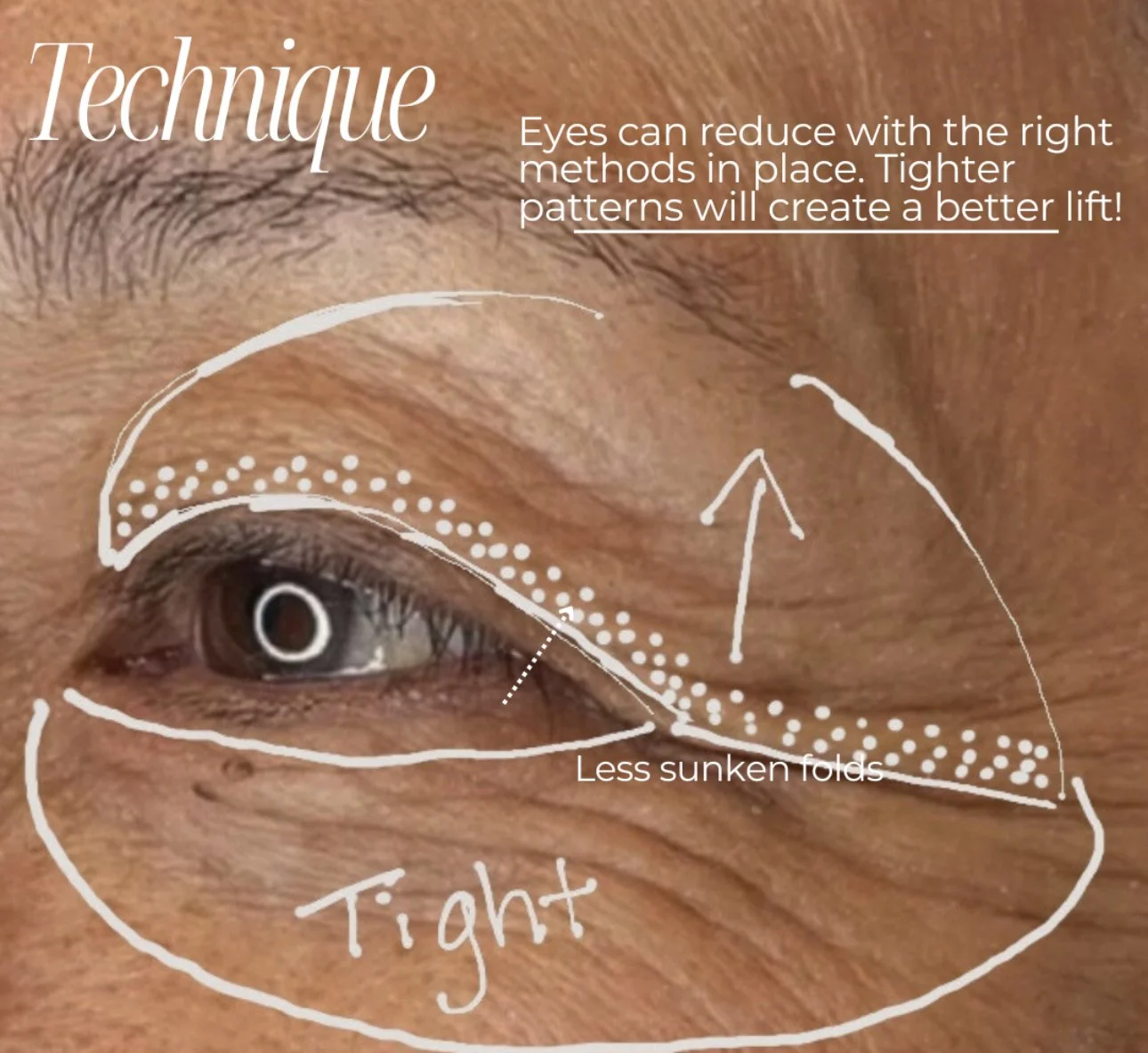
The skin around our eyes is one of the first areas to show visible signs of aging. It’s thinner, more delicate, and prone to losing elasticity faster than other parts of the face. Traditionally, blepharoplasty surgery has been the gold standard for correcting sagging lids but advances in energy-based treatments like Fibroblast Plasma Lift now offer a non-surgical, science-backed alternative.
So how does plasma energy interact with eyelid skin on a cellular level? And how does it compare to the surgical approach of blepharoplasty? Let’s dive into the biology behind both.
The eyelids are covered by the thinnest skin on the body—0.3-0.5mm thick—making them highly vulnerable to aging changes like:
Collagen loss (Type I and III collagen decline by ~1% per year after age 20).
Elastin degradation, leading to crepey texture and loss of snap-back.
Accumulation of redundant skin (dermatochalasis) from gravity and repetitive movement.
Weakened orbital septum causing fat pads to protrude (under-eye “bags”).
To rejuvenate this area effectively, treatments must address not just the surface appearance but also the cellular machinery driving tissue aging.
Fibroblast devices use a plasma arc a small electrical spark created by ionizing the gases between the tip of the device and your skin. This spark never touches the skin directly but delivers focused thermal energy to the upper dermis.
Here’s what happens scientifically:
Controlled Microtrauma
The plasma arc causes sublimation (turning solid tissue to gas) of tiny dots of epidermal tissue, creating a micro-injury grid.
This triggers a wound healing cascade without cutting or excising skin.
Fibroblast Cell Activation
In response to the microtrauma, dermal fibroblasts (cells responsible for collagen and elastin synthesis) enter a proliferative phase.
They secrete Type I and III collagen, glycosaminoglycans (like hyaluronic acid), and elastin fibers over 8–12 weeks.
Immediate Tissue Contraction
Heat denatures existing collagen fibers, causing them to shrink and tighten instantly.
This is why clients often see an immediate lift, which improves further over time.
Neo-collagenesis and Remodeling
Over the following weeks, new collagen fibers are laid down and cross-linked, leading to a thicker, firmer dermis.
🥼 Scientific Comparison: Fibroblast vs. Blepharoplasty
🧪 Why Fibroblast Is Ideal for Eyelid Skin
Targets collagen and elastin regeneration for long-term results.
Does not alter deeper fat pads, preserving natural eyelid volume.
Precision-controlled energy minimizes risk to surrounding tissues.
Excellent for mild to moderate eyelid laxity and crepey texture.
Think of Fibroblast as a way to “reprogram” your skin to act younger without cutting or stitching.
❌ When Blepharoplasty May Be Needed
Fibroblast is not a substitute for surgery in severe cases.
Choose blepharoplasty if:
Skin excess is so severe it obstructs your vision.
There are large herniated fat pads under the eyes.
You want dramatic, instant tightening in a single procedure.
✨ The Takeaway
Fibroblast Plasma Lift harnesses the power of plasma energy to awaken your skin’s fibroblasts, regenerate collagen, and deliver a natural tightening effect perfect for rejuvenating delicate eyelid skin.
Unlike surgery, it works with your body’s own biology to restore firmness and smoothness over time. For clients seeking a non-invasive, science-backed solution, Fibroblast is the eyelid treatment of the future.